Posts

Balance Exercise In Stroke Patients.
Image
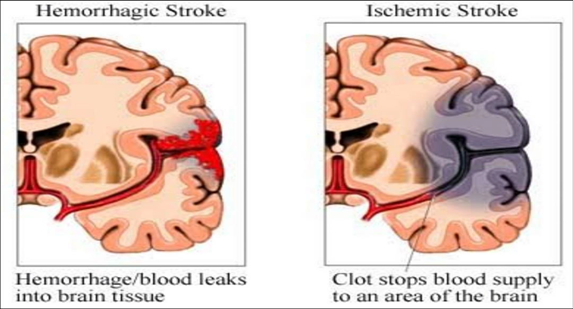
  Balance Exercise In Stroke Patients. ·        The world   health Organization define the stroke is “ Rapidly developing Clinical signs of focal   (or global)   disturbance of cerebral function, lasting more than 24 hours or leading to death, with no apparent cause other than that of vascular origin. ·          Stroke was the second-leading global cause of death after ischemic heart disease, representing 11.8% of total death worldwide. ·        India   and other developing countries are facing a double burden communicable and non - Communicable disease. The estimated adjusted prevalence rate of stroke range 84-264/100,000 in rural and 334 – 424/100,000 in urban areas. The incidence rate is 119-145/100,000 based on recent population studies. ·        The incidence of stroke rises rapidly with increasing age: two third of all stro...

Spinocerebellar Ataxia

 Ataxia is a term for a group of disorders that affect co-ordination, balance and speech. Spinocerebellar ataxia (SCA) is a term referring to a group of ataxias that are characterized by degenerative changes in the cerebellum and sometimes in the spinal cord. Moreover, it is a hereditary and progressive condition. Presentation of SCA  There are more than 20 identified types of Spinocerebellar ataxias; SCA1, SCA2, SCA3 and SCA6 being the most common amongst all. Though each may have unique signs and symptoms, however, in general, it is difficult to differentiate among the different types, and all are presented by problems with movement that tend to get worse over time. Depending on the type of SCA, signs and symptoms can develop anytime from childhood to late adulthood.  Affected people may experience some or all of the following:  Problems with coordination and balance (ataxia)  Uncoordinated walk (ataxic gait, also called drunkard’s gait)  Poor hand-...

SPORTS INJURY REHABILITATION : IN VOLLEYBALL PLAYERS

 It focuses on understanding, preventing & treating sports related injuries & musculoskeletal conditions. As a rehabilitator, we play a vital role in supporting Athletes, players & sports participants of all abilities.  5 STAGES OF INJURY REHABILITATION PHASE 1 : PROTECTION AND OFFLOADING PHASE 2 : PROTECTED RELOADING & RECONDITIONING PHASE 3 : SPORTS SPECIFIC  STRENGTH, CONDITIONING & SKILLS PHASE 4 : RETURN TO SPORT PHASE 5 : INJURY PREVENTION RECOVERY AND REHAB IN VOLLEYBALL PLAYERS   However, Volleyball players may be at risk for injuries due to sport specific tasks such as jumping & landing as well spiking and blocking the ball.   In volleyball players imbalances in strength & flexibility can result from repetitive motions such as jumping, landing , internal rotation of shoulder during serves & spikes.   Improper landing techniques & poor body control is also responsible for repeated injuries.    Also,...